Most shelf advice starts with a stud finder and a drill. If you rent, that is the one thing you cannot do. A home office still needs shelf space, so here are the ways to add it without making a single hole in the wall.
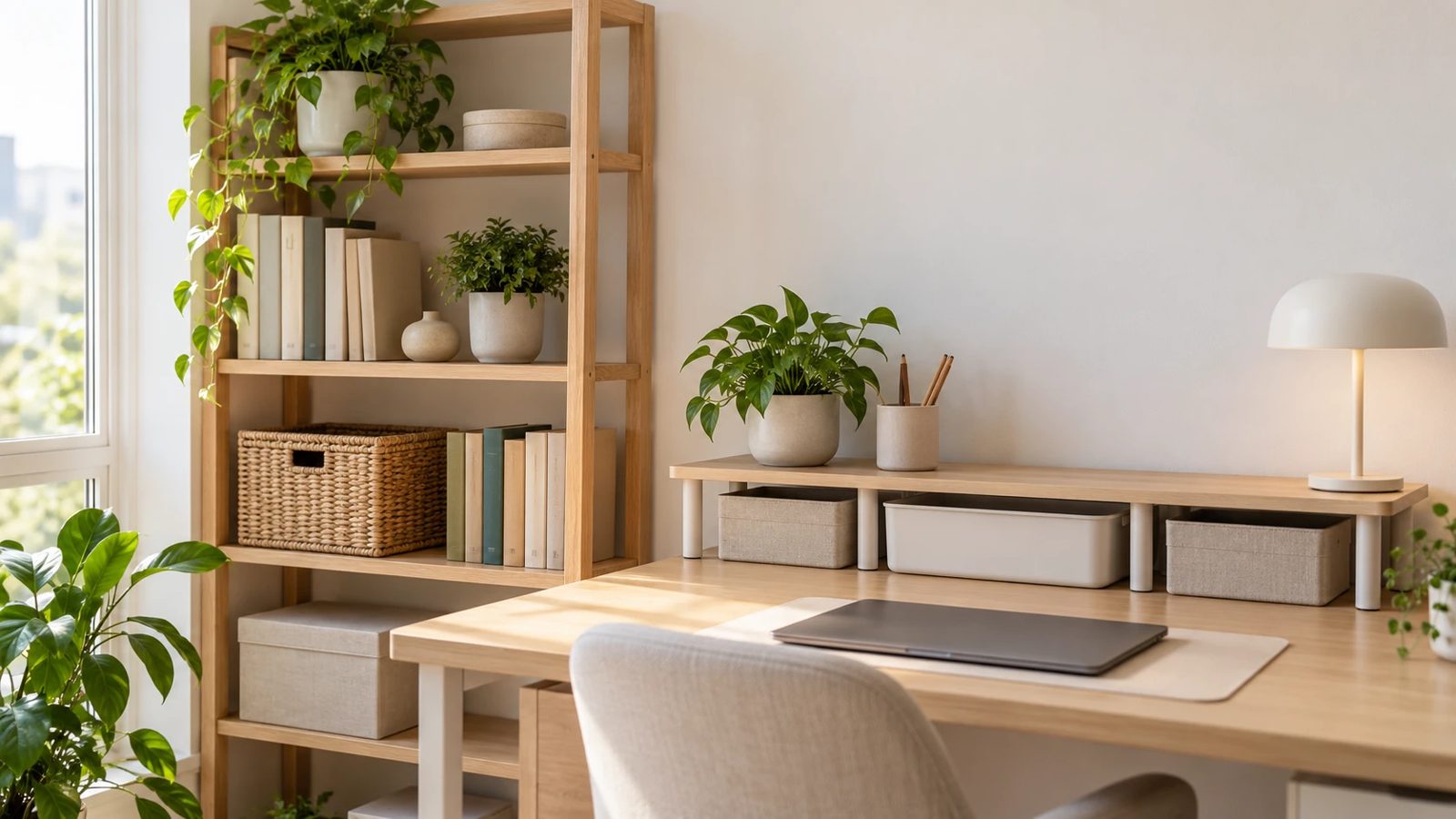
Floor-standing shelves
A freestanding bookcase or ladder shelf needs no wall contact. It stores the most, and it moves when you do. Two cautions: tall, narrow units can tip, so check whether the maker supplies an anti-tip strap, and fit the strap only if your lease allows a small screw hole. Otherwise, choose a lower unit or one with a wide base.
Desktop and under-desk shelves
A shelf that sits on the desk lifts bins or a second screen above the work surface. It uses desk depth, so measure how much you can spare. A clamp-on under-desk shelf attaches to the edge and needs no screws, within the clamp's stated opening and weight limit.
Over-door and over-desk racks
Over-door racks hang on the top of a door and sit flat against it. They suit light items like folders and supplies. Check the door's thickness against the rack's fit, and keep the load low.
Adhesive shelves
Adhesive-backed shelves can work for very light items, but the weight limits are low and removal can damage paint. Treat them as a short-term choice, and test on a hidden spot first.
How to choose
- Weigh what you will store. Books are heavier than they look.
- Measure the available floor depth or desk depth.
- Pick the option that matches the load: floor-standing for heavy items, desktop or clamp-on for light items, adhesive only for very light ones.
- Check the lease before using any wall contact, even adhesive.
Related guides: rental-friendly home office upgrades and monitor arms and shelves that skip wall mounting.